About the Journal
1. Scope and aims
2. Peer review proces
3. Open access policy
4. Indexing in databases
5. Statemen on ethics and good practice
6. Digital preservation policy
7. Partner journals
8. Supporting institutionss
9. Publishing insitutions
Scope and aims
The journal is being launched to continue — and also to give fresh momentum to — research in oral history, following in the footsteps of the journal Historia, Antropología y Fuentes Orales, which became a key reference point for the study of oral narrative. Building on that legacy, and responding to the current state of academic research, we aim to turn this scholarly space into a meeting point for disciplines that use orality, memory and testimony as their main sources. The journal will offer an interdisciplinary framework bringing together History, Anthropology, Sociology, Linguistics, Social Psychology, Cultural studies, Digital Humanities and Heritage Studies. We also hope to strengthen a field that already has a strong tradition in other contexts, while combining academic rigour with the study and promotion of educational innovation projects and activities developed in Spain in which orality and memory are central. Its aims are therefore: (1) to advance knowledge of experiences, memories and identities through testimony and oral practices at local, national and transnational levels; (2) to foster methodological innovation, including testimony and discourse analysis, prosody, audiovisual ethnography, mapping, oral corpora, archives and preservation; (3) to promote open science through OJS and open access; and (4) to build bridges between academia and society through dossiers, debates, reviews, interviews and teaching. The journal is committed to diversity and global reach — with particular attention to subaltern voices — as well as multilingualism, accepting the languages of Spain and Portuguese, with trilingual abstracts. It is also committed to editorial excellence through double-blind peer review, integrity and transparency.
The journal’s empirical core is the oral source and its methodological development, with a broad thematic range including memory, gender, decoloniality, health, education, intangible heritage, war memories, post-conflict studies and many other topics.
Peer review process
In the publication agreement, authors guarantee that their work is original and has not been published elsewhere. Research results must be presented clearly and coherently so that they can be properly analysed and reviewed. The journal uses an external double-blind peer review process, guaranteeing both the anonymity of the author and the impartiality of reviewers in their decision-making. Each author is expected to address the suggestions and corrections proposed in the reports, and to correct and/or retract any errors that may later be identified. Reviewers, for their part, are expected to provide improvement proposals for the assigned articles in an objective and fair way, drawing on their expertise as specialists. Information received through the review process must not be disclosed or used for any other purpose; this is a basic commitment assumed when accepting a review assignment.
Receipt of a manuscript does not imply acceptance for publication. Manuscripts are first read by the Editorial Board to check whether they meet the journal’s style requirements and basic standards of scientific content, and whether they fit the journal’s editorial aims and scope. If an article does not fit the general line of the journal, it will be returned to the author within less than one month, without external review.
If the manuscript passes this first stage, it will be sent to two or more external specialists under a double-blind peer review system, preserving the anonymity of both authors and reviewers. Review reports may recommend revisions. If the two reports on a manuscript are contradictory, a third external review will be sought. Authors whose articles receive a favourable decision subject to revisions must resubmit the article to Revista Interdisciplinar de Historia Oral once the suggested improvements have been made, so that the journal can check that the recommendations have been properly incorporated. If the revisions are substantial, the article will be reviewed again before any final decision on publication is made. If a submission must be rejected, the decision will be communicated to the author with a clear explanation of the reasons. The response time for the first round of evaluation will be between six and eight months.
Reviewers will take the following aspects into account in their reports: (1) the length of the article, its internal structure and overall approach, as well as the clarity and quality of its writing; (2) the definition of objectives, hypotheses, methodology, sources and bibliography; (3) the originality of the content, based on the use and recognition of historical sources, and its contribution to knowledge; and (4) the use of correct and inclusive language.
Conflict of interest
If reviewers detect any conflict of interest, they must inform the Editorial Board so that other specialists can be assigned. This includes, among other cases, family links up to the third degree, belonging to the same department, supervising the work of the author, or being part of the same research project or research group. The Editorial Board undertakes to monitor possible conflicts of interest, and all those involved are required to recuse themselves whenever a real or apparent conflict of interest arises, such as those mentioned above.
Confidentiality
All reviews will be carried out under conditions of the strictest confidentiality. The journal and its editors will not reveal the identity of reviewers, nor the contents of reports or correspondence arising from the review process, to anyone outside the editorial process. Reviewers are bound by strict confidentiality; neither manuscripts nor correspondence between authors and editors during the review process may be shared with third parties without the written permission of the editors. Strictly speaking, authors are not subject to the same requirement — they may choose to seek advice from colleagues during the revision process once the reports have been received — but public disclosure of the content of review reports and correspondence with the editorial team is not appropriate. Any author who acts in this way loses the right to privacy protection from the journal.
Open access policy
The intellectual property of the articles belongs to their authors. Editing and publication rights belong to the journal. Revista Interdisciplinar de Historia Oral provides free access to its contents on the understanding that this supports wider global exchange of knowledge.
Once an article has been published in the journal, the articles and other materials contained in it may be freely used only for educational or scientific purposes, and only if explicit reference is made to the year and issue in which the work was published. Any commercial use is expressly prohibited by law.
Revista Interdisciplinar de Historia Oral does not charge authors any article processing charges (APCs).
Documents are published under the Creative Commons 3.0 licence: Attribution–NonCommercial–NoDerivatives (CC BY-NC-ND 3.0).
Indexing in databases
Statement on ethics and good practice
The co-editors and the Editorial Board of Revista Interdisciplinar de Historia Oral declare that the journal’s purpose is to advance and disseminate knowledge. The authors of published articles assume responsibility for the content of their work, which must always be based on sources, originality and methodological rigour.
Plagiarism and scientific fraud
Plagiarism is the act of reproducing text or other materials from other publications without properly acknowledging the source. Material is considered plagiarised regardless of whether it has been modified or paraphrased. Appropriating the work of others and presenting it as one’s own is neither scientific nor ethical behaviour, and is a serious violation of the professional standards of research. Plagiarism is a serious ethical breach and may also involve a legal breach of copyright if the reproduced material has already been published. Any text in which such fraudulent behaviour is detected will be rejected immediately. Authors who wish to cite other published works must provide the full original reference and place any verbatim quotations within quotation marks. Graphs and illustrations may only be reproduced with the appropriate permission and must be properly identified in the caption of the figure itself, always following the journal’s rules.
Scientific fraud also occurs when not all the researchers involved in the preparation of the work are acknowledged, when a manuscript is submitted simultaneously to several publications, when it is divided into separate parts that share the same hypotheses and methods, or when false, distorted or unproven data are used.
The publication of any work that infringes the rights established in Articles 138 to 143 of Spanish Intellectual Property Law 22/11 of 11 November 1987 is the sole responsibility of the author. The Editorial Board of Revista Interdisciplinar de Historia Oral is not, in any case, responsible for the credibility or authenticity of published works, nor does it necessarily identify with the opinions expressed in them. Authors retain the copyright of their work without restriction.
In order to guarantee the academic integrity of the journal, Revista Interdisciplinar de Historia Oral uses the Feedback Studio application, which allows documents to be checked for incorrect citations or possible plagiarism.
Commitments of the Editorial Board
The Editorial Board of Revista Interdisciplinar de Historia Oral undertakes to safeguard ethical principles and the scientific quality of the publication. It also has the responsibility and authority to accept or reject an article on the basis of the reviews carried out by specialists. It reserves the right to withdraw any work received, accepted or already published if plagiarism, scientific fraud, falsification or duplicate publication is detected. Likewise, it will promote the publication of corrections or retractions when errors are identified.
We expect all contributors to understand the ethical expectations set out in the journal rules and in this statement, recognising that they are the basic standards of the academic community.
Good practice in gender equality
Revista Interdisciplinar de Historia Oral is committed to promoting equality between men and women, to giving visibility to the scientific work of women, and to encouraging the use of inclusive language in scholarly publications. This principle is reflected in the presence of women in the journal’s management positions, in the publication of the full names of the authors of published articles in order to make women authors more visible, and in the rules on inclusive language included in the Submissions section and in the guidelines for submitting articles.
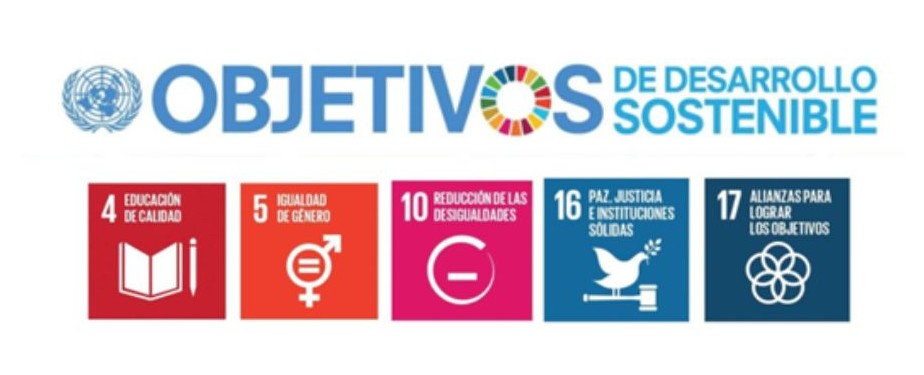
Sustainable Development Goals
Digital preservation policy
This journal develops different processes intended to guarantee permanent accessibility to the digital objects hosted on its own servers:
-
Back-up copies carried out by the UC3M SDIC, which has scheduled backup of all its servers.
-
Monitoring of the technological environment in order to anticipate possible migration of obsolete formats or software.
-
Digital preservation metadata.
-
Use of DOI.
The files published on this website are available in easily reproducible formats (PDF).
The digital preservation policy will be reviewed periodically by Universidad Carlos III de Madrid.
Partner journals
-
Testimonios — Asociación de Historia Oral de la República Argentina.
-
Pasado y Presente — Universidad de Alicante.
-
Oral History — Taylor and Francis.
Supporting institutions
-
Red Ibérica de Historia Oral
-
Grupo de investigación HISTAGRA de la Universidade de Santiago de Compostela (USC)
- Grupo de investigación Experiencia Moderna Euskal Herriko Unibertsitatea (EHU)
- Archivo de Fuentes Orales para la Historia Social de Asturias (AFOHSA) de la Universidad de Oviedo (UniOvi)
Publishing institutions
-
Institute of Contemporary Stutdies, Politics and Governance. Universidad Carlos III de Madrid (UC3M)
-
Julio Caro Baroja Institute of Historiography. Universidad Carlos III de Madrid (UC3M)



